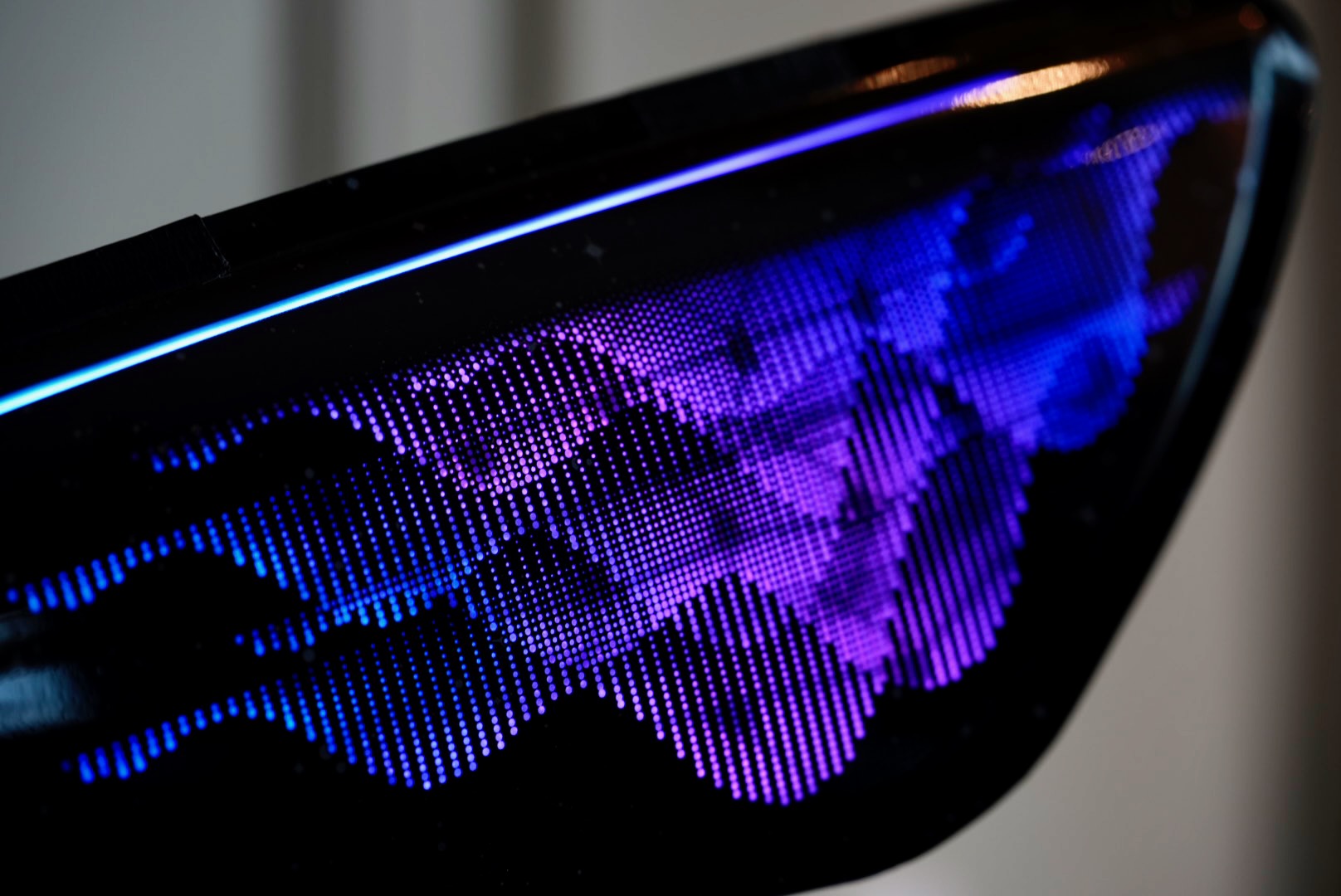
Following our previous deep dive into IMSE® LightLines, I discussed with Tero Rajaniemi, Program Manager Automotive at TactoTek, about another IMSE (In-Mold Structural Electronics) illumination solution: the IMSE® SurfaceLight. It enables covering the whole product surface with dynamic, programmable, multi-color illumination.

IMSE SurfaceLight is an advanced technology that integrates dynamic ambient lighting directly inside a single 3D-shaped plastic part.
Today, decorative trim components in vehicle interiors or home appliances are entirely passive; they simply sit there. SurfaceLight transforms these parts into active, smart surfaces that inform, guide, and delight users with adaptable, ambient illumination.
Our design philosophy from day one has been about giving industrial designers ultimate design freedom. Instead of treating lighting as an additional feature that comes with a structure to be hidden behind the surface, IMSE SurfaceLight turns the entire part into a seamless canvas for light.
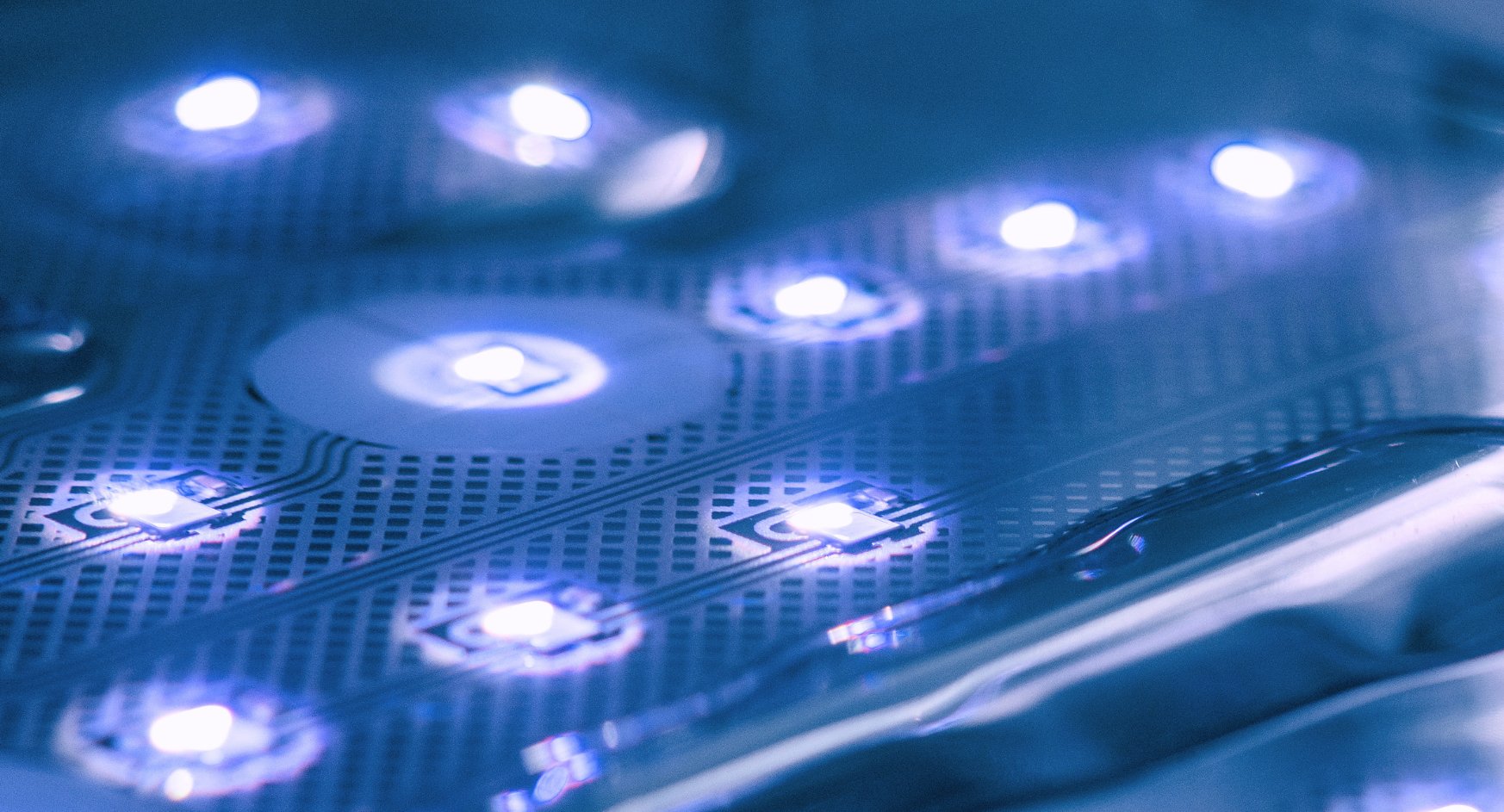
This is achieved by integrating electronics, optics, and structure into a single-piece, seamless structure. It fundamentally changes ambient illumination because you are no longer trying to guide light from a remote source; you are designing the surface itself to emit light exactly where and how you want it. With the IMSE SurfaceLight solution, the light source is embedded within the thin surface structure.
The secret lies in the IMSE manufacturing process, which eliminates the conventional "sandwich" assembly.
In a traditional dynamic lighting setup, you need to layer multiple components: separate rigid or flexible PCBs, light guides, optical diffusers, heavy plastic housings, and so on. That quickly blows your packaging depth to several centimeters.
With IMSE, you don't build layers; you integrate. The process starts with flat plastic films. First, circuitry is printed, and electronic components are assembled on the film using standard Surface Mount Technology (SMT) process. Next, the film is formed into its final 3D shape, and ultimately, resin is molded directly over the electronics.
The entire system, with optics, circuitry, and structural plastic, forms a solid part just 3.5 millimeters thick.
Beyond the significant space savings, this monolithic architecture offers a mechanical advantage: it eliminates the need for separate moving layers. By removing loose trim clips and plastic-on-plastic interfaces, the interior squeaks and rattles that often develop over time in multi-layered assemblies are eliminated.
This is one of the most exciting aspects of the solution: it adapts to the design, not the other way around. To give designers maximum flexibility, SurfaceLight accommodates different integration methods:
Because the IMSE part is incredibly thin yet mechanically rigid, it serves as a solid structural entity underneath premium surfaces without adding bulk.
But the customization options are not restricted to materials only: the number and placement of LEDs can also be adjusted according to the targeted brightness level and adjustability of light animations. It ensures your creative intent is never compromised by technical limitations, and that the part is adjusted for the needed features in a cost efficient way.
For instance, high-opacity stone gets a denser LED layout to guarantee perfectly uniform brightness, while transmissive fabrics or micro-perforated wood utilize fewer LEDs to keep the system highly cost-effective.
Traditional architectures typically rely on configurations, where LEDs are plugged into one side and the light is pushed across the part. No matter how many advanced optical elements you integrate, physics wins: the light naturally fades and dims as it moves further away from the source. This limits the available lighting effects to simple intensity changes, such as overall dimming or breathing.
IMSE SurfaceLight is free from these limitations. Because the LEDs are embedded throughout the part surface, you can create uniform illumination from edge to edge.
The LEDs are individually controllable, so you can create fully adjustable light animations: the light can move horizontally, vertically, or diagonally over a fluid, three-dimensional surface.
Your imagination is basically the only limit when you program light animations, such as immersive nighttime greeting sequences, advanced welcome animations, highly visible functional safety alerts, and other light animations that guide the user.
However, the IMSE SurfaceLight solution is not only for those who look for dynamic animations. In general, if you want to bring life on dark surfaces, this provides an excellent yet cost efficient method to add good quality light that spreads evenly on the surface, without non-illuminated edges or bezels, or light that dims towards the end of the part.
With IMSE SurfaceLight, designers can use their full creative potential, achieving premium appearance and good user experience without costly and bulky structures.
Furthermore, the solution allows for advanced combinations of lighting features within the exact same component. You can combine full-surface ambient light with sharp light lines or icons in the same, seamless part. For example, you can engineer a single door trim piece that creates soft, indirect accent lighting below the part, while simultaneously featuring a sharp, dynamic direct light line running through the part, with ambient illumination covering the rest of the surface.
While automotive interiors are a natural fit for this technology, the demand for SurfaceLight spans much further:
Ultimately, if your product requires a three-dimensional form, demands flawless, controllable light, and has zero room to waste on bulky conventional electronics, SurfaceLight is the solution that makes it possible.
To explore the technical specifications of IMSE illumination solutions, get the recording of our technical webinar of IMSE® SurfaceLight and IMSE® LightLine solutions on this page.



.jpg)
